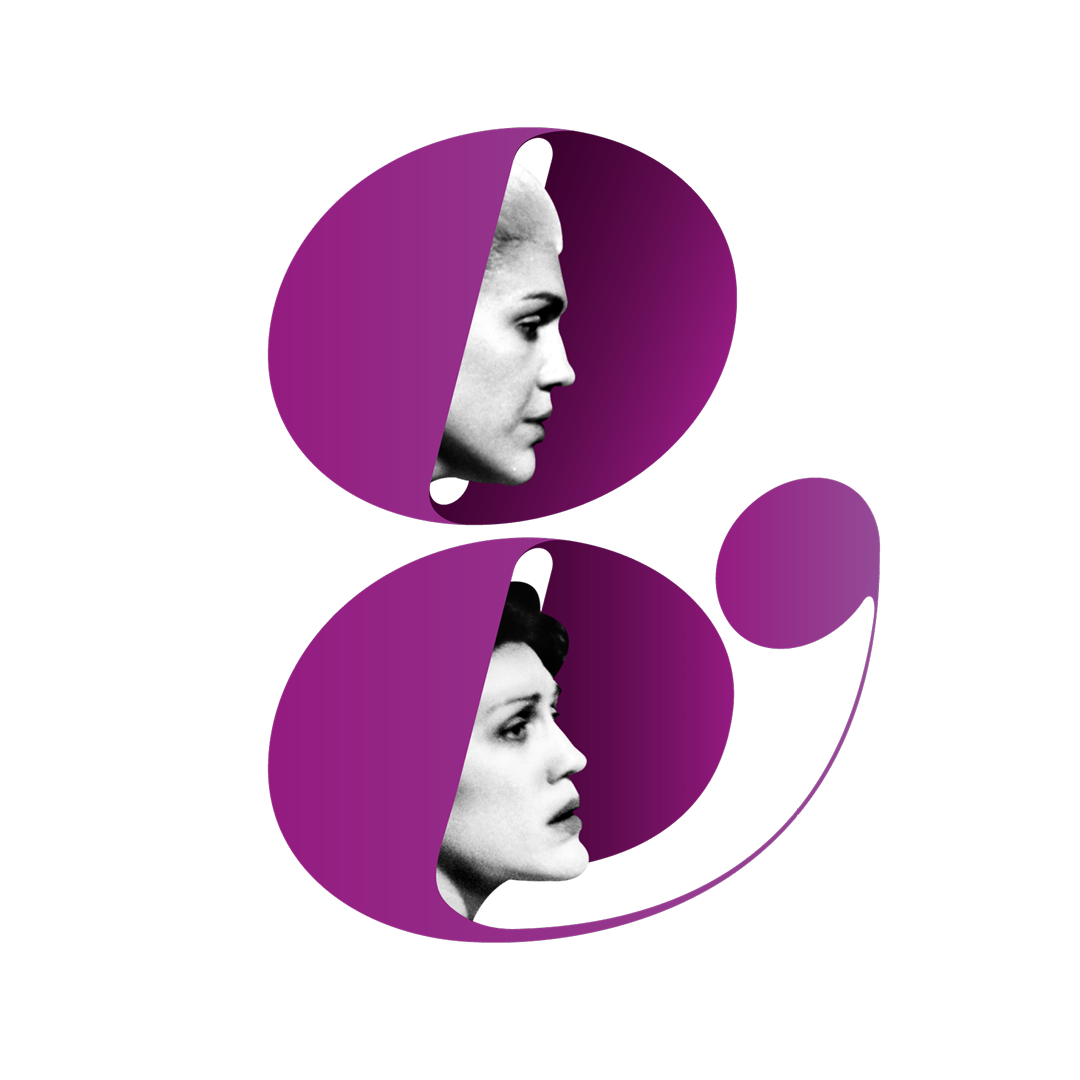
Orfeo ed Euridice
Christoph Willibald Gluck
- 23
Jan
2026 - 25
Jan
2026 - 29
Jan
2026 - 31
Jan
2026
about
Musica Christoph Willibald Gluck
Azione teatrale per musica in tre atti composta intorno al mito di Orfeo, su libretto di Ranieri de’ Calzabigi
Versione Vienna 1762
Edizione Casa Musicale Sonzogno di Piero Ostali, Milano
Prima rappresentazione assoluta il 5 ottobre 1762 al Burgtheater di Vienna
Durata 1 ora e 30 minuti, senza intervallo
direttore Fabio Biondi
regia Shirin Neshat
scene Heike Vollmer
costumi Katharina Schlipf
luci Valerio Tiberi
coreografie Claudia Greco
drammaturgia Yvonne Gebauer
direttore della fotografia Rodin Hamidi
FILARMONICA ARTURO TOSCANINI
CORO DEL TEATRO REGIO DI PARMA
Maestro del coro Martino Faggiani
Nuovo allestimento Teatro Regio di Parma
In coproduzione con ITeatri di Reggio Emilia
spettacolo con sopratitoli in italiano
Tickets from €10
Cast
Carlo Vistoli
Francesca Pia Vitale
Theodora Raftis
“When Alessio Vlad invited me to direct Orfeo, I immediately felt this opera was the right story for me with interesting visual and conceptual possibilities that were perfectly aligned with my own past work in photography and film. Orfeo is layered with many notions of dualities, love & death, grief & joy, heaven & earth, world & underworld, magic & realism, and finally the states of consciousness and subconscious. So from the start I envisioned this opera in black and white to embody some of these paradoxes, but also truthful to my own past signature work where contrasts between all the different elements of a story are punctuated in visual terms.
Together with my wonderful team, especially the dramaturgist Yvonne Gebauer, slowly found our interpretation and visual language for Orfeo and Eurydice. In our interpretation Orfeo appears not as a mythological figure but as a concrete human being, a man conflicted between his ego, narcissism and his unconditional love for his wife Eurydice. Orfeo becomes completely shattered once faced with the traumatic death of his Eurydice through suicide. He falls into an existential crisis, and is no longer able to distinguish between illusion and reality, life and death, innocence and guilt. This disorientation opens up an imaginary space for him and the underworld turns into a landscape of consciousness and judgement, where Orfeo finds himself in a bizarre trial, encountering shadows of himself, memories, mortality, and evidence of guilts. Ultimately, Orfeo’s passage through the underworld becomes a journey into darkness, doubt, pain and human limitations. Eurydice on the other hand, tormented by the loss of her child and her husband’s cruelty and inability to grieve this tragedy, leaps to her death.
Later when Orfeo, in a desperate attempt, and with Amore’s magical help appears into the underworld to release Eurydice, she hesitantly returns to life only to find herself disillusioned and overwhelmed with the absences of her son. This opera begins and ends with silent black and white films which provide another layer of narrative, mostly intimate looks into Orfeo and Eurydice’s characters and relationship.”
Shirin Neshat
“Orpheus and Eurydice are one of the most famous tragic couples in cultural history. In Gluck’s 1762 opera, their story is reduced to its essentials. Orpheus mourns the death of his beloved wife and, in despair, turns to the gods, begging them to bring Eurydice back to him. Amore appears and reveals how to bring her back from the underworld, but on the sole condition that he does not look at her until the end of their ascent. Orpheus manages to overcome the Furies of the underworld, reaches the Elysian Fields, finds Eurydice and, determined to obey Amore’s order, refuses to look at her, trying to resist her pleas not to ignore her. They are now almost in the sunlight when Eurydice threatens him, saying she would rather die than live with him without being loved. At that point, Orpheus’ resistance collapses and he turns towards Eurydice: immediately, the girl falls to the ground, dying for the second time. But just before Orpheus, in despair, takes his own life, Amore appears and brings Eurydice back to life.
Shirin Neshat places these events in a contemporary setting. Orpheus thus appears not only as a mythological figure but also as a human being who, due to the traumatic loss of Eurydice, falls into an existential crisis that catapults him out of his previous mental coordinates. Like Dante at the beginning of the Divine Comedy, he finds himself in a state of disorientation: “In the middle of the journey of our life / I found myself within a forest dark / for the straightforward pathway had been lost”. The death of his beloved marks the moment when the outside world and its rational order lose their meaning. Orpheus is no longer able to distinguish between inside and outside, between life and death, between guilt and innocence, and this state of disorientation opens up an imaginary space for him, which is both the afterlife and a landscape of consciousness. There he encounters the shadows of himself, the traces of guilt, the fragments of his love. Like Dante’s journey through hell, Orpheus’ passage through the realm of the dead is marked by darkness, doubt and the painful realisation of his own limitations. Orpheus finds himself face to face with himself. In this process of introspection, Amore does not appear as an external deity, but as the personification of an energy, the embodiment of Orpheus’ desire, his capacity to love and, at the same time, his vulnerability. In other words, it becomes the vehicle for inner reconciliation. This inner trial allows Orpheus to perceive Eurydice no longer as a mirror of his own projections, but as an independent being, his true alter ego.”
Yvonne Gebauer
media
Information
Fondazione Teatro Regio di Parma
strada Garibaldi, 16/a
43121 Parma – Italia
Tel (+39) 0521 203911
Public transport
Bus lanes 1, 2, 15
Via Mazzini: bus lanes 3, 4, 5, 8
Piazza Ghiaia: bus lanes 6, 7, 8, 9, 11, 12, 13, 21, 23
Parking
Parcheggio Piazza Ghiaia
Parcheggio Toschi
The Teatro Regio in Parma is fully accessible. From the entrance, a straight, level path leads directly to the stalls, where four seats are reserved for wheelchair users. A seat is reserved for a companion in the row adjacent to each seat designated for disabled spectators. The companion must remain present throughout the entire visit to the theatre if the spectator is unable to move independently.
Spectators with temporary mobility impairments who hold a ticket or season ticket of any category (stalls, box, gallery) must notify the Box Office in good time; the Box Office reserves the right to change seat allocations where necessary in accordance with safety regulations. The Theatre also reserves the right to alter the number of available seats for technical or staging requirements.